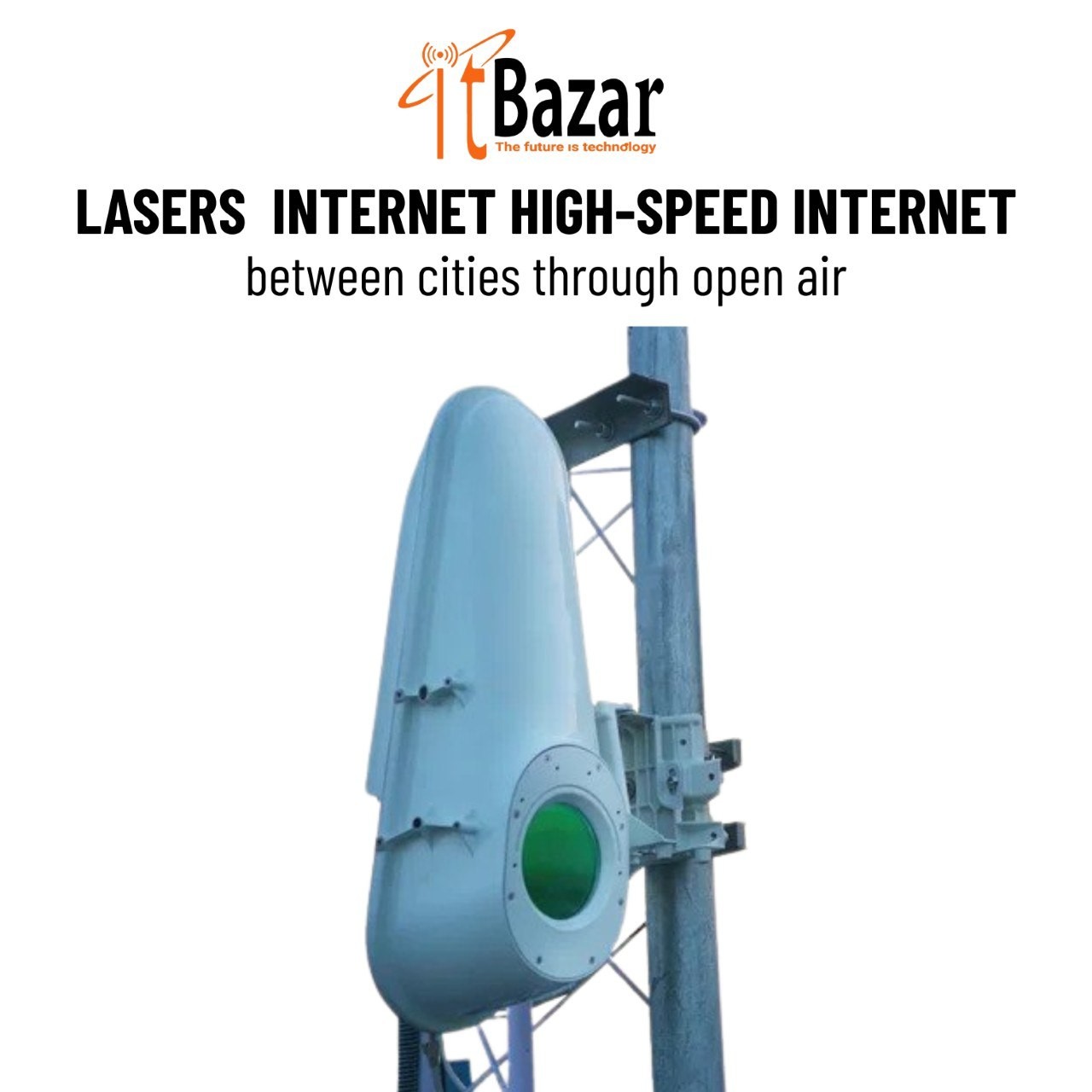

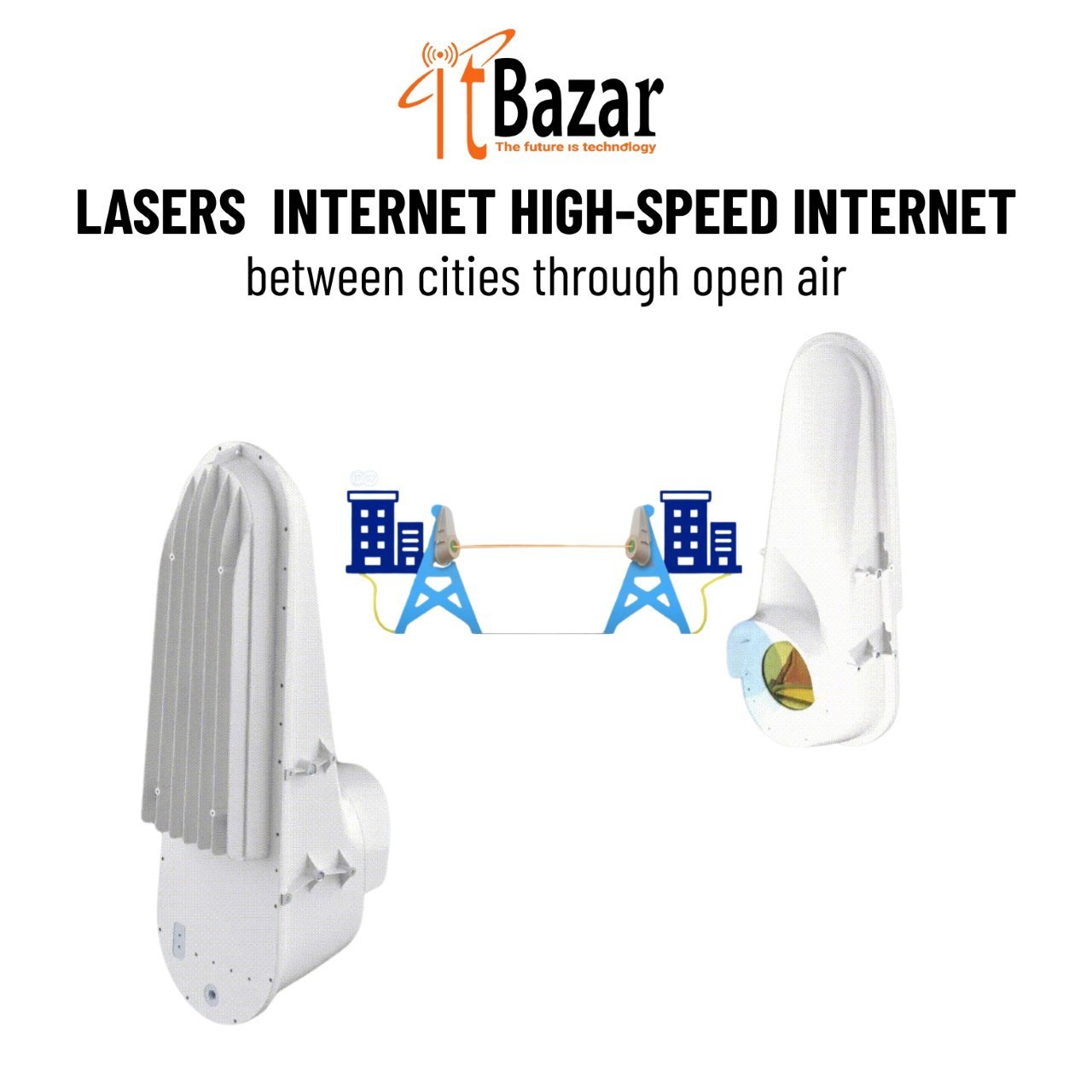
Lasers internet high-speed internet ,between cities through open air
Inhouse product


Lasers internet high-speed internet ,between cities through open air লেজার ইন্টারনেট হাই স্পিড ইন্টারনেট ,বেটুইন সিটিস বাই ওপেন এয়ার
Lasers are being increasingly explored and implemented for high-speed internet and data communication due to their unique properties. Here's a breakdown of how lasers are used in this context:
How Lasers Enable High-Speed Internet:
- Fiber Optic Communication: This is the most widespread application of lasers in internet technology.
- Data Transmission: Lasers convert electrical signals into pulses of light, which are then transmitted through thin strands of glass or plastic called optical fibers.
- High Bandwidth: Optical fibers offer significantly higher bandwidth compared to traditional copper cables, allowing for the transmission of much larger amounts of data. Different "colors" or wavelengths of light can be sent simultaneously through the same fiber, further increasing capacity (Dense Wavelength Division Multiplexing - DWDM).
- Low Signal Loss: Light signals traveling through fiber optic cables experience minimal loss of strength, enabling long-distance data transmission without the need for frequent signal boosting.
- Speed: Fiber optic networks, powered by lasers, form the backbone of modern high-speed internet, enabling fast data transfer for various applications like streaming, cloud computing, and online gaming. Speeds can reach up to 10,000 Mbps (10 Gbps), although 1,000 Mbps is more common.
- Free-Space Optical Communication (FSOC): This technology uses lasers to transmit data through the air.
- Wireless Connection: FSOC eliminates the need for physical cables, offering a solution for situations where laying fiber is difficult or costly (e.g., connecting buildings, remote areas).
- High Bandwidth: FSOC can achieve high data transfer rates, sometimes comparable to fiber optics (up to 20 Gbps in some commercial systems).
- Rapid Deployment: FSOC systems can be set up quickly and easily, making them suitable for temporary or emergency data links.
- Security: The narrow, directed laser beams used in FSOC provide inherent security, making it difficult to intercept data.
- Applications: FSOC is used for building-to-building connections, last-mile connectivity in urban areas, satellite communication, and even in disaster relief scenarios.
- Limitations: FSOC is susceptible to weather conditions like fog, haze, and heavy rain, which can obstruct the laser beams. Line-of-sight between the transmitting and receiving points is also required.
- Satellite Communication: Lasers are revolutionizing data transfer to and from satellites.
- Increased Data Rates: Laser communication (lasercom) allows satellites to send and receive significantly more data compared to traditional radio frequency (RF) systems (10 to 100 times more).
- Lower Latency: Laser links can offer lower latency, which is crucial for real-time applications.
- Enhanced Security: Laser signals are more difficult to intercept and are resistant to jamming.
- Inter-Satellite Links (ISLs): Lasers enable direct communication between satellites, creating a more efficient and resilient network in space. This reduces the reliance on ground stations for relaying data.
- Applications: Earth observation, space-based internet constellations (like Starlink and Project Kuiper), and secure military communications are benefiting from laser satellite communication.
- Li-Fi (Light Fidelity): This emerging technology uses visible light, including lasers, to transmit data.
- High Data Rates: Laser diodes can be employed in Li-Fi systems to achieve higher data rates and longer communication ranges compared to LED-based Li-Fi.
- Potential Applications: Li-Fi could be used in environments where radio waves are undesirable or restricted, and for secure, short-range communication.
- Optical Interconnects in Computing: Within data centers and high-performance computing systems, lasers are used to create fast and efficient connections between processors, memory modules, and other components. This helps overcome the limitations of traditional electrical interconnects at high data rates.
General Information about High-Speed Internet Technologies:
Besides laser-based technologies, other common methods for delivering high-speed internet include:
- Fiber Optic: As mentioned above, this uses glass or plastic fibers to transmit data as light pulses, offering the fastest and most reliable speeds.
- Cable: Uses coaxial cables (like those used for cable television) to transmit data. It's widely available and offers speeds faster than DSL, but upload speeds are typically lower than download speeds.
- DSL (Digital Subscriber Line): Uses existing copper telephone lines to transmit data. Speed and availability depend on the distance from the provider's central office.
- 5G/4G LTE: Mobile wireless technologies that provide internet access through cellular networks. 5G offers significantly higher speeds and lower latency compared to 4G LTE, but its availability is still expanding.
- Fixed Wireless: Uses radio waves to transmit data from a provider's tower to an antenna at the user's location. It's often used in rural areas where wired infrastructure is limited.
- Satellite: Provides internet access via communication satellites. It's available in most areas but typically has higher latency and can be more expensive than other options.
The "best" type of internet connection depends on factors like availability in your location, cost, desired speed, and reliability requirements. Fiber optic is generally considered the fastest and most reliable, but it's not yet universally available. Cable internet is a common and often fast alternative in many areas, while 5G is a promising new technology with increasing availability.
1. Fiber Optic Communication: The Backbone of Modern Internet Data Transmission: Lasers convert electrical signals into light pulses transmitted through optical fibers (thin strands of glass or plastic).
- High Bandwidth: Fiber optics offer significantly greater bandwidth than copper cables, allowing for the transmission of vast amounts of data.
Wavelength Division Multiplexing (WDM) further increases capacity by sending multiple light wavelengths simultaneously. - Low Signal Loss: Light signals in fiber experience minimal degradation over long distances, reducing the need for signal amplification.
- Speed: Fiber optic networks, driven by lasers, provide the foundation for current high-speed internet, commonly offering speeds up to 1 Gbps, with the potential for much higher rates (10 Gbps and beyond).
2. Free-Space Optical Communication (FSOC): Wireless High-Speed Connections
Wireless Data Transfer: FSOC uses lasers to transmit data through the air, eliminating the need for physical cables.
- High Bandwidth Potential: Can achieve data rates comparable to fiber optics (up to 20 Gbps in some systems).
- Rapid Deployment: FSOC systems are quick to set up, ideal for temporary connections or areas where fiber installation is challenging.
- Security: Narrow laser beams offer inherent security against eavesdropping.
- Applications: Building-to-building links, last-mile connectivity, satellite communication, and disaster recovery.
Companies like Taara (an Alphabet spin-off) and Transcelestial are actively developing and deploying FSOC technology. - Limitations: Susceptible to weather conditions (fog, rain) and requires a clear line of sight.
3. Satellite Communication: Enhancing Space-Based Internet
- Increased Data Rates: Laser communication (lasercom) enables satellites to transmit and receive data at much higher speeds than traditional radio frequencies.
- Lower Latency: Laser links can offer reduced delays in data transfer.
- Enhanced Security: Laser signals are harder to intercept and less prone to jamming.
- Inter-Satellite Links (ISLs): Lasers allow direct communication between satellites, improving network efficiency.
Starlink utilizes optical inter-satellite links in their constellation. - Applications: Earth observation, space-based internet services, and secure communications.
Recent advancements include China's successful demonstration of 100 Gbps satellite-to-ground laser communication.
4. Li-Fi (Light Fidelity): Internet Through Light
Data Transmission via Light: Li-Fi uses visible light (including lasers and LEDs) to transmit data.
- High Potential Speeds: Research suggests the potential for very high data rates.
- Applications: Environments where radio waves are restricted, secure short-range communication.
- Advantages: Higher bandwidth potential than Wi-Fi, potentially more secure as light doesn't pass through walls, and no electromagnetic interference.
5. Optical Interconnects in Computing: Faster Data Flow Within Systems
- Lasers are used within data centers and high-performance computers to create high-speed connections between components, overcoming the limitations of electrical connections at very high data rates.
In summary, lasers are a fundamental technology driving the capabilities of high-speed internet, from the long-haul fiber optic networks that form the internet's backbone to emerging wireless and satellite-based solutions promising even greater speeds and connectivity in diverse environments.
Reviews & Ratings
Product Queries (0)
Login Or Registerto submit your questions to seller
Other Questions
No none asked to seller yet
Frequently Brought Products


itBazar
itBazar || Total Networking Solutions